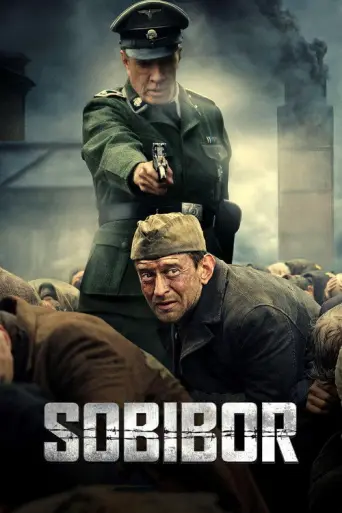
Sobibor
- heavy
- extreme
Heavy, steady, extreme war / drama, grounded in texture. Ambivalent, mid-stakes, cold.
How every film is hand-scored →The film is based on a real story that happened in 1943 in the Sobibor concentration camp in German-occupied Poland. The main character of the movie is the Soviet-Jewish soldier Alexander Pechersky, who at that time was serving in the Red Army as a lieutenant. In October 1943, he was captured by the Nazis and deported to the Sobibor concentration camp, where Jews were being exterminated in gas chambers. But, in just 3 weeks, Alexander was able to plan an international uprising of prisoners from Poland and Western Europe. This uprising resulted in being the only successful one throughout the war, which led to the largest escape of prisoners from a Nazi concentration camp.
Our read · Sobibor (2018) reads as a heavy, steady, grounded war · drama entry — extreme in intensity, mid-stakes in scope, cold in temperature, ambivalent in outlook.


More info & search links
The shape of Sobibor
What watching it is actually like.
“You want a powerful true story of the only successful Nazi death camp uprising.”
Skip it tonight — You are not ready for graphic Holocaust violence and suffering.
The reading.
Each axis is hand-scored — not derived from votes or genre averages. The marker shows where this film sits; the gradient fill uses the film's own cinematography palette.
Eight films that read most like this one.
Closeness in the twelve-axis space — how the film actually reads, not “people also liked.”
All films like Sobibor — ranked, with why →

Discussion
What does your Movie DNA look like?
Rate a few films you've seen. We map your taste across the same twelve axes and find the films you'll actually want to watch tonight.
Read my taste — 60 sec