1966 · drama · comedy
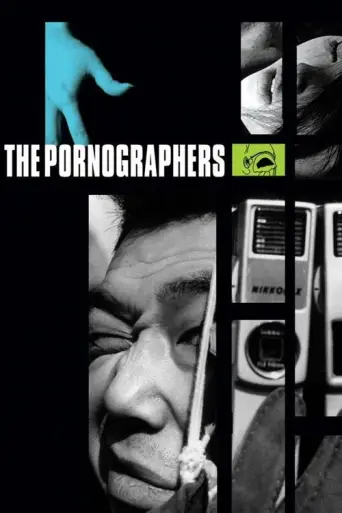
The Pornographers
Directed by Shōhei Imamura2h 8m1966
Subu makes pornographic films. He sees nothing wrong with it. They are an aid to a repressed society, and he uses the money to support his landlady, Haru, and her family. From time to time, Haru shares her bed with Subu, though she believes her dead husband, reincarnated as a carp, disapproves. Director Shohei Imamura has always delighted in the kinky exploits of lowlifes, and in this 1966 classic, he finds subversive humor in the bizarre dynamics of Haru, her Oedipal son, and her daughter, the true object of her pornographer-boyfriend’s obsession. Imamura’s comic treatment of such taboos as voyeurism and incest sparked controversy when the film was released, but The Pornographers has outlasted its critics, and now seems frankly ahead of its time.
Our read: The Pornographers (1966) reads as a sombre, measured, inventive drama · comedy entry — measured in intensity, intimate in scope, cold in temperature, nihilistic in outlook, with a strong directorial signature.
Sombre, measured, measured drama / comedy, inventive in texture. Nihilistic, intimate, cold.
- sombre
- measured
- inventive
- intimate
Watching The Pornographers tonight? Spin for your lens.
Everyone on the couch spins once and gets one craft to watch for. After the credits, compare what you caught.







Your lens for tonight
?
Everyone on the couch gets one craft to watch for. Spin the wheel to get yours. Sound on: the narrator reads your mission.

More info & search links




How The Pornographers feels to watch.
Each axis is scored by hand, not from votes or genre averages. The bar uses the film's own colours.
What watching it is actually like.
“You want satirical 1960s Japanese comedy about lowlifes making porn.”
Skip it tonight — You want fast plots or explicit on-screen sex scenes.
Eight films that feel like this one.
Closest in the twelve-axis space, not “people also liked”. All films like The Pornographers, with why →







Discussion
Make it a movie night.
Pick a mood, get a film the whole couch will enjoy, and give everyone something to watch for.
Pick tonight's film →