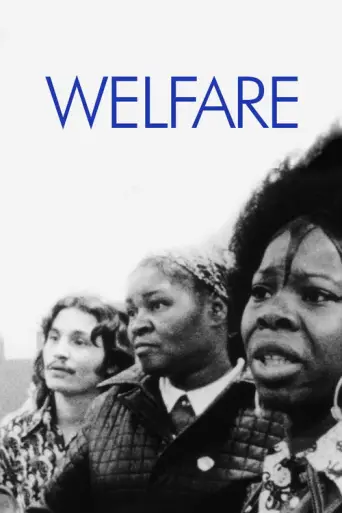
Welfare
- heavy
- slow-burn
- bleak
Heavy, slow-burn, measured documentary, grounded in texture. Nihilistic, intimate, measured.
How every film is hand-scored →WELFARE shows the nature and complexity of the welfare system in sequences illustrating the staggering diversity of problems that constitute welfare: housing, unemployment, divorce, medical and psychiatric problems, abandoned and abused children, and the elderly. These issues are presented in a context where welfare workers as well as clients struggle to cope with and interpret the laws and regulations that govern their work and life.
Our read · Welfare (1975) reads as a heavy, slow-burn, grounded documentary entry — measured in intensity, intimate in scope, measured in temperature, nihilistic in outlook, with a strong directorial signature.



Availability in the UK · via JustWatch
More info & search links
The shape of Welfare
What watching it is actually like.
“You want an unfiltered observational documentary on bureaucracy and human need.”
Skip it tonight — Skip if 167 minutes of real welfare office interactions will exhaust or bore you.
The reading.
Each axis is hand-scored — not derived from votes or genre averages. The marker shows where this film sits; the gradient fill uses the film's own cinematography palette.
Eight films that read most like this one.
Closeness in the twelve-axis space — how the film actually reads, not “people also liked.”
All films like Welfare — ranked, with why →




Discussion
What does your Movie DNA look like?
Rate a few films you've seen. We map your taste across the same twelve axes and find the films you'll actually want to watch tonight.
Read my taste — 60 sec