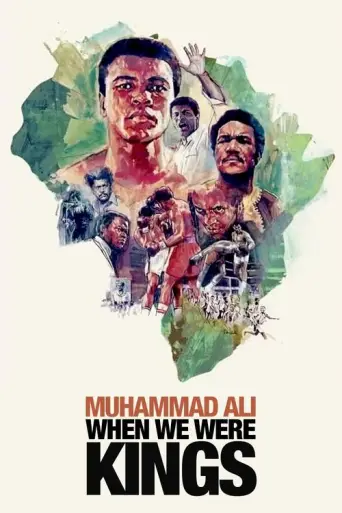
When We Were Kings
- warm
- intense
- redemptive
It's 1974. Muhammad Ali is 32 and thought by many to be past his prime. George Foreman is ten years younger and the heavyweight champion of the world. Promoter Don King wants to make a name for himself and offers both fighters five million dollars apiece to fight one another, and when they accept, King has only to come up with the money. He finds a willing backer in Mobutu Sese Suko, the dictator of Zaire, and the "Rumble in the Jungle" is set, including a musical festival featuring some of America's top black performers, like James Brown and B.B. King.
Our read · When We Were Kings (1996) reads as a warm, steady, grounded documentary · sport entry — measured in intensity, mid-stakes in scope, measured in temperature, redemptive in outlook. Hand-scored on twelve axes of taste — mood, pacing, weirdness, hope, stakes, humour, reality, density, warmth, auteur, intensity, and era — with a derived palette drawn from its dominant cinematography.

More info & search links
The shape of When We Were Kings
The reading.
Each axis is hand-scored — not derived from votes or genre averages. The marker shows where this film sits; the gradient fill uses the film's own cinematography palette.
Eight films that read most like this one.
Geometric closeness in the twelve-axis space — pure DNA distance, not “people also liked.” Distance numbers are listed under each title for sceners who like to know the maths.




Discussion
What does your Movie DNA look like?
Rate a few films you've seen. We map your taste across the same twelve axes and find the films you'll actually want to watch tonight.
Calibrate yourself