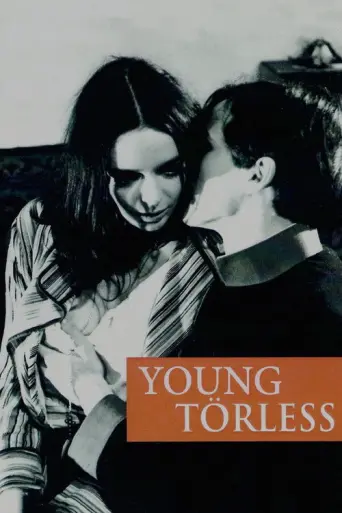
Young Törless
- heavy
- measured
- intense
- bleak
- intimate
Heavy, measured, measured drama, grounded in texture. Nihilistic, intimate, measured.
How every film is hand-scored →At an Austrian boys' boarding school in the early 1900s, shy, intelligent Törless observes the sadistic behavior of his fellow students, doing nothing to help a victimized classmate—until the torture goes too far. Adapted from Robert Musil's acclaimed novel, Young Törless launched the New German Cinema movement and garnered the 1966 Cannes Film Festival International Critics' Prize for first-time director Volker Schlöndorff.
Our read · Young Törless (1966) reads as a heavy, measured, grounded drama entry — measured in intensity, intimate in scope, measured in temperature, nihilistic in outlook, with a strong directorial signature.



More info & search links
The shape of Young Törless
What watching it is actually like.
“You want a stark 1960s arthouse film on bullying, complicity, and sadism in a boys' school.”
Skip it tonight — You want entertainment or depictions of schoolboy torture and abuse.
The reading.
Each axis is hand-scored — not derived from votes or genre averages. The marker shows where this film sits; the gradient fill uses the film's own cinematography palette.
Eight films that read most like this one.
Closeness in the twelve-axis space — how the film actually reads, not “people also liked.”
All films like Young Törless — ranked, with why →




Discussion
What does your Movie DNA look like?
Rate a few films you've seen. We map your taste across the same twelve axes and find the films you'll actually want to watch tonight.
Read my taste — 60 sec