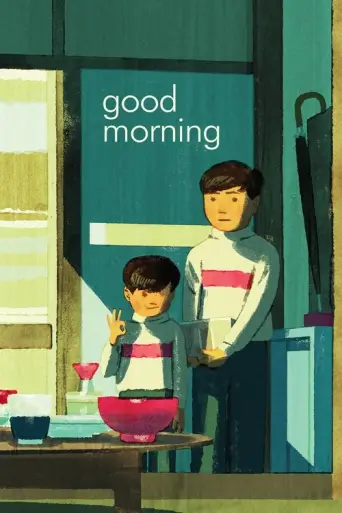
1959 · comedy · family
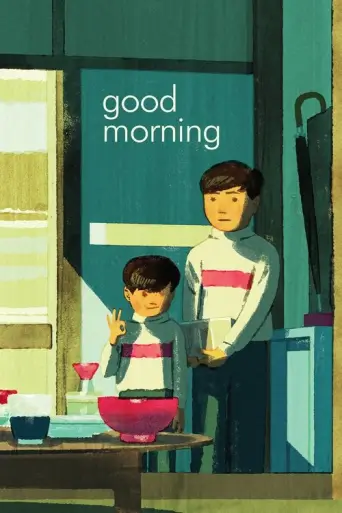
Good Morning (1959)
Directed by Yasujirō Ozu1h 34m1959
A lighthearted take on director Yasujiro Ozu’s perennial theme of the challenges of intergenerational relationships, Good Morning tells the story of two young boys who stop speaking in protest after their parents refuse to buy a television set. Ozu weaves a wealth of subtle gags through a family portrait as rich as those of his dramatic films, mocking the foibles of the adult world through the eyes of his child protagonists. Shot in stunning color and set in a suburb of Tokyo where housewives gossip about the neighbors’ new washing machine and unemployed husbands look for work as door-to-door salesmen, this charming comedy refashions Ozu’s own silent classic I Was Born, But . . . to gently satirize consumerism in postwar Japan.
Our read: Good Morning (1959) (1959) reads as a cosy, measured, grounded comedy · family entry — gentle in intensity, intimate in scope, tender in temperature, redemptive in outlook, with a strong directorial signature.
Cosy, measured, gentle comedy / family, grounded in texture. Redemptive, intimate, tender.
- cosy
- measured
- redemptive
- signature
- intimate
Watching Good Morning tonight? Spin for your lens.
Everyone on the couch spins once and gets one craft to watch for. After the credits, compare what you caught.







Your lens for tonight
?
Everyone on the couch gets one craft to watch for. Spin the wheel to get yours. Sound on: the narrator reads your mission.


Availability in the UK · via JustWatch
More info & search links


How Good Morning feels to watch.
Each axis is scored by hand, not from votes or genre averages. The bar uses the film's own colours.
What watching it is actually like.
“You want gentle Japanese family comedy about kids protesting and adult foibles.”
Skip it tonight — You dislike slow-paced or subtitled slices of postwar family life.
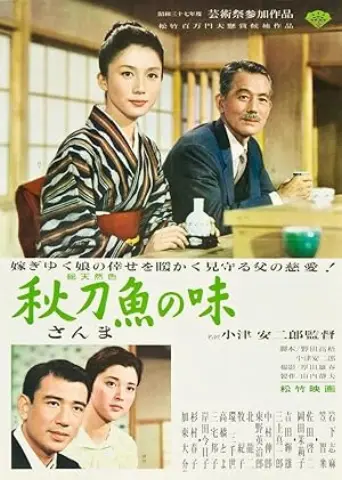
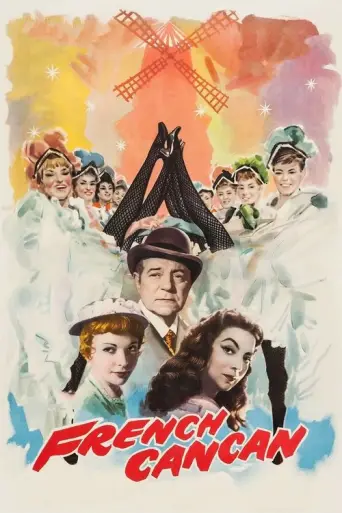
Eight films that feel like this one.
Closest in the twelve-axis space, not “people also liked”. All films like Good Morning, with why →







Discussion
Make it a movie night.
Pick a mood, get a film the whole couch will enjoy, and give everyone something to watch for.
Pick tonight's film →